By Amanda Purvis, COPARC Project Director
Growing up in DC I was often times one of the only white people in a room. I grew up with friends who were born in India, Israel, Sudan, Iran, Burma, and Bali. We were all different colors, different economic classes, and all of our lunches looked and smelled completely differently. Play dates consisted of attending synagogue with a friend, before taking off my shoes and bowing to the Buddha at the entrance to the neighbor’s house, and finally racing home to not miss Wednesday night church. I grew up with all of the people. I didn’t realize what a privilege that was until the first day of seventh grade.
The summer between 6th and 7th grade, my parents moved our white, middle-class family back to their home, Colorado. My first day of seventh grade was nothing but terrifying; for all of the normal reasons. I remember when I finally got home (I forgot how to get home once I got off the bus and wandered the neighborhood for some time) my mom was waiting to greet me at the door. Her first question, “How was it?” my response, “Mom, everyone here is white. Where are we?”
Fast forward fifteen years, my husband and I became foster parents in the Denver Metro area. During one of our monthly visits we found out from our certification worker that we were currently the only family in three counties who was willing to take African American boys under the age of three. I first thought she was joking. She wasn’t. I started to get angry, and she could sense it. She explained that many families in the area weren’t racist, but felt that they couldn’t meet the needs of Black children within their community and didn’t want to expose them to negative racial experiences that might happen if they were to move into their neighborhoods.
I am still chewing on this explanation seven years later.
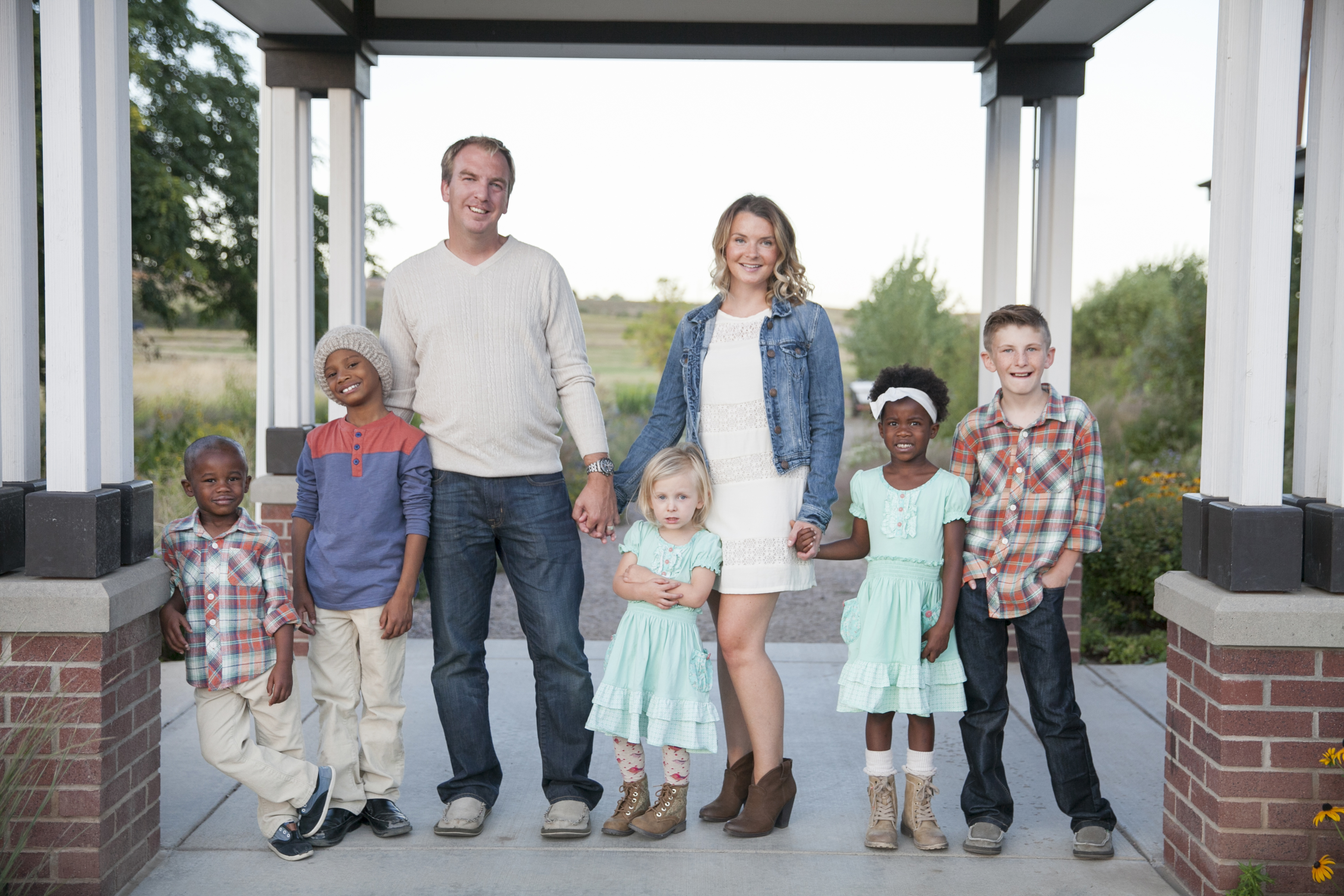
Our family now consists of three Black children, two White children, two White parents, and our Belgian Malanois who Demetrius says is definitely Black. We live in an upper middle class predominantly white area. I have never had the pleasure of going out in public with my family and not being stared at; the story of how our family came together is on display at all times. My children don’t have the option of deciding who and when to tell their story of adoption, and that is both a blessing and a curse.
When my children were younger, strangers would ask really ridiculous and inappropriate questions. Usually it was when we were trapped in line at the grocery store or waiting in a crowd. Often times their stares would predict the forthcoming comment and I’d be able to avoid it using body language and dismissive eye contact. As a result of the constant onslaught of personal questions and strange comments, my children learned early to speak up and assert themselves.
But as they grow older, my Black sons are no longer “so cute!” and people usually guess they are much older than their actual age. There are no longer adorning comments, or questions about where they’re from, or how they joined our family. When they act out in class they often get harsher punishments than their older White brother who did the exact same things.
We have ongoing discussions about race and inequality. We fill our home with people who look like every one of us, and we do it often. We seek out sports teams and coaches who look like my children. Our in-home library is full of amazing children’s books that depict Black main characters. We celebrate hair and have created a culture of rhetoric and love through our hair traditions. We talk about microaggressions, skin tone, and appropriate responses to peer comments all the live long days. And my husband and I will continue to do our part in helping them to develop a healthy racial identity, as well as a healthy self-worth. Yet, as an adoptive mom, I must understand that just as I will never replace or make up for the loss of their biological mother, I will also never be a Black woman, which means that there is something missing in my parenting of them. For those of us who got into this whole parenting thing, we didn’t do it to fail, and yet, I have – and that is a tough pill to swallow.
Parenting kids from trauma is a whole new level in this parenting game, and parenting transracially is, too. It isn’t something we can pretend doesn’t exist, or sugar coat for our children. Not only do our children have the trauma that comes with adoption, but now through a transracial adoption, they no longer have the privilege of sharing their story of adoption with those that have earned their trust, as it has been broadcast through their eyes. If you are parenting transracially and haven’t thought about the implications of your children’s racial identity, I hope you’ll join us this month as we hear from three transracial adult adoptees as they share their stories on our blog. Please check out these resources:
- Parenting Transracially Class – March 2nd. 2017 in Colorado
- Parenting Transracially Webinar – March 29th, 2017 held online
Book Lists:
Blogs: