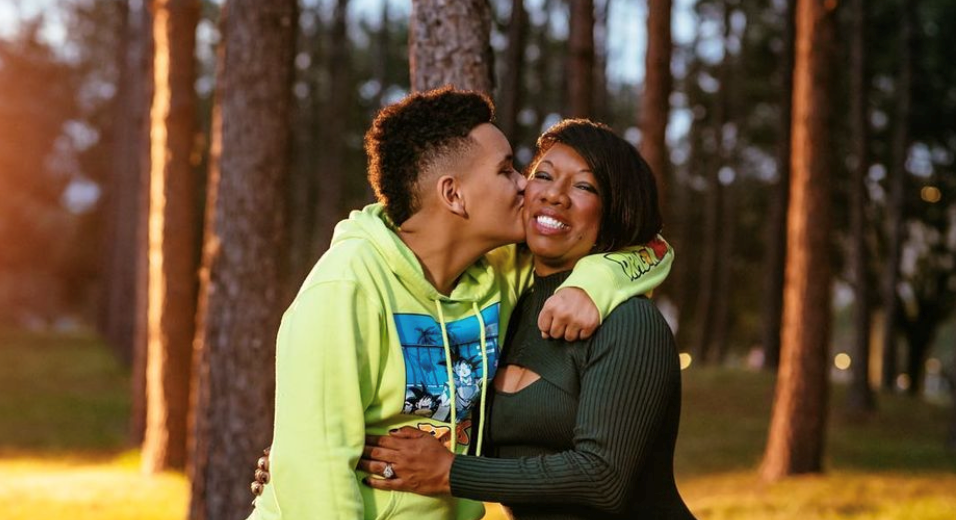
By Ligia Noemi Cushman, M.A., an employee of Raise the Future
When I lead a workshop or post something about adoption on Instagram, it never fails that someone will reach out to me and say, “Wow! You don’t look like an adoptive parent!” As an Afro-Latina mother, this comment reminds me that our culture often glorifies White families who adopt Black children. However, there is also a narrative that is very rarely shared. Adoptive parents come from all walks of life and look different; we exist, yet somehow our stories don’t always get shared.
When considering why others don’t see me as the “typical” adoptive mom, it’s important to note that according to the Department of Health and Human Services, over 40 percent of adoptions in the United States are transracial (White families adopting Black children). Furthermore, the report indicates that the number of transracial adoptions increased by 58 percent between 2005-2007 and 2017-2019, while same-race adoptions increased by only 24 percent. So it’s no wonder stories of diversity in adoption are not amplified.
Another question I was asked when we brought our son home from the hospital came from a neighbor: “Where did you get that baby?” I could understand why she was curious. Having neither been pregnant nor discussed our adoption with anyone but close family and friends, seeing me here and now with this White-presenting baby was surprising. However, as our conversation evolved, I quickly realized she wasn’t curious; she was concerned. I explained that we were in the process of adopting our baby, but her expression let me know she wasn’t comfortable. What happened next still gives me chills.
A few minutes later, a police officer stopped me as I took our son for a walk in his stroller to ask me the same question: “Where did you get that baby?” I stood there, scared and humiliated in front of neighbors coming out to see what was happening, and realized that this would not be the last time our family would face challenging moments like these. I wasn’t ready for that encounter — or the many others we would experience over the next sixteen years. I share these complex stories because it’s necessary to have conversations that bring about change. After these events, I immediately understood that this neighborhood would never fully embrace our family. So that year, we sold the house and moved to a new community.
Why do people think it’s okay to ask me questions like these?
When you adopt someone who doesn’t look like you, some believe it is their right to ask questions. Additionally, when the media only shares one narrative that glorifies White adoptive parents, we limit our understanding of what children need and who is included in the adoption community. Far too often, we tell a narrative of a White parent saving a Black child. This is an example of the White Savior Complex.
The term White Savior Complex refers to a White person “saving” a person or people of color (POC) from a regrettable situation in a self-serving manner. It is critical to note that White adoptive parents typically adopt Black children with the best intentions — but even still, they are perpetuating the idea of White Saviors by doing so. As a community, we need to work hard to dismantle and challenge the idea of “saviors” in all its forms because it is harmful to children. Every adoption has its own story, and every adoption starts with loss. Many of our society’s narratives about adoption downplay the deep and lasting harm that comes with trauma of family separation, the loss of culture, and the tendency to expect adoptees to be “grateful” without acknowledging the tremendous grief and loss they have experienced. Lack of access to their culture — and in some cases, their language — can forever change a child’s life. In addition, harm may manifest when caregivers fail to validate their children’s very real experiences with racism. Children and families of color need the adoption community to focus on the issues, realities, and racist experiences they will navigate throughout their lifetimes.
As a Black/Latina adoptive mom, I am constantly in tune with the intersections of my identity. I have grown familiar with my own experiences of marginalized motherhood, as most adoption conversations and resources center on the experiences of White adoptive mothers. Living in the margins is not where I want to reside. So, unapologetically, I have taken up space to help respond to the narratives that discount the experiences of Black/Brown adoptive moms.
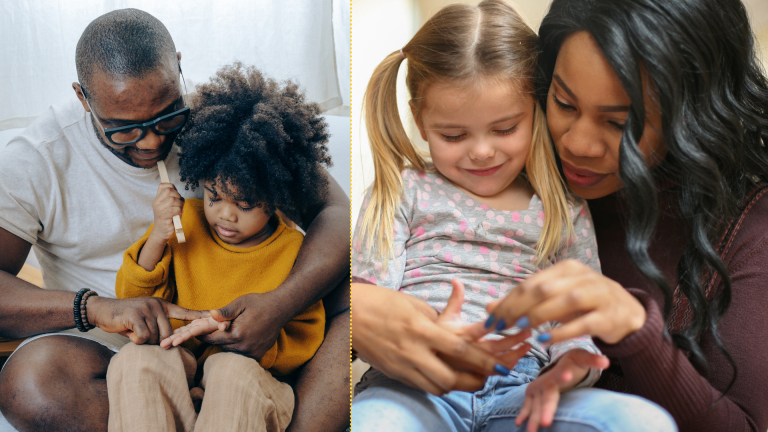
Listen to the stories of Black and Brown adoptive parents.
- One excellent resource is The Fabulous. Adoptive. Black. (FAB) Moms website. The site was created by Dr. Christine Beliard, an adoptive mother, Licensed Marriage and Family Therapist, professor at the University of Houston, and consultant. Her work centers on the influence of historical racial trauma on couples and families of color. Dr. Beliard created this space out of a need to support Black adoption and mothers of adopted children. It provides a community for Black adoptive moms who share connections related to race and adoption. In addition, their resources are available to women considering adoption, those who are in post-placement, and mothers of adult adoptees.
- Every parent on earth has to figure out how to raise their children. They decide which life lessons, values, morals, and guidance to provide them. For families of color, there is an extra layer that parents have to consider when talking with their children about the racial inequalities and imbalances that exist in society today. “The Talk” brings tragic realities to the forefront. Families of color must consider when to have this necessary conversation with their children. Likewise, POC have to decide when to discuss the tragic realities that they and their loved ones have experienced. One vlogger who depicts this well is Beleaf in Fatherhood. Our son is multiracial and has faced racism since coming home from the hospital. I’ll never forget the day we talked with him. There is a sense of innocence that left him at age five. It’s also important to note that this is not a one-time conversation, but rather a conversation that evolves as children grow.
- The Talk is also an opportunity to build up a child’s sense of pride by exposing them to the richness of whatever culture they come from. Building up self-confidence is an essential characteristic of The Talk. For generations, parents of color have imparted a sense of belonging to their children.
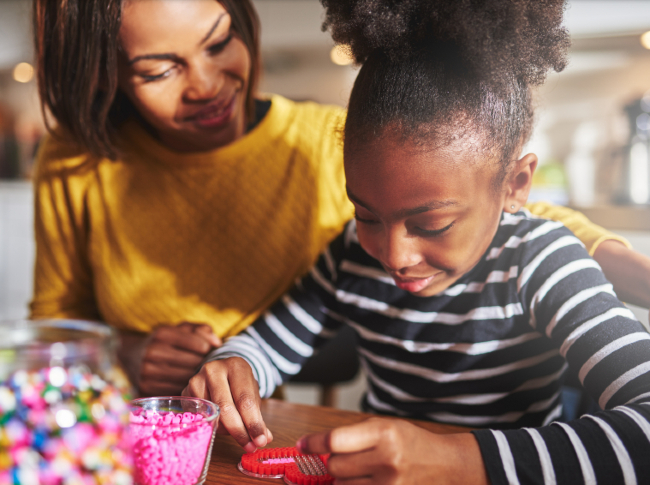
Knowing that adoption and race intersect, the adoption community must evolve and create spaces that address marginalized motherhood. At the same time, it is vital to amplify the voices of adoptive parents of color who can engage in conversations on what it means to parent Black/Brown children in a race-fueled society. So, let’s start by creating a space where Black/Brown moms can be visible, where they can teach and support the adoption community in ways that help children of color and families thrive. I hope that statements like “You don’t look like an adoptive mom!” will disappear if we can do that – because our stories and motherhood matter.
--
Ligia Cushman is an author, blogger, child welfare consultant, international speaker, and proud employee of Raise the Future. Click here to visit her website.