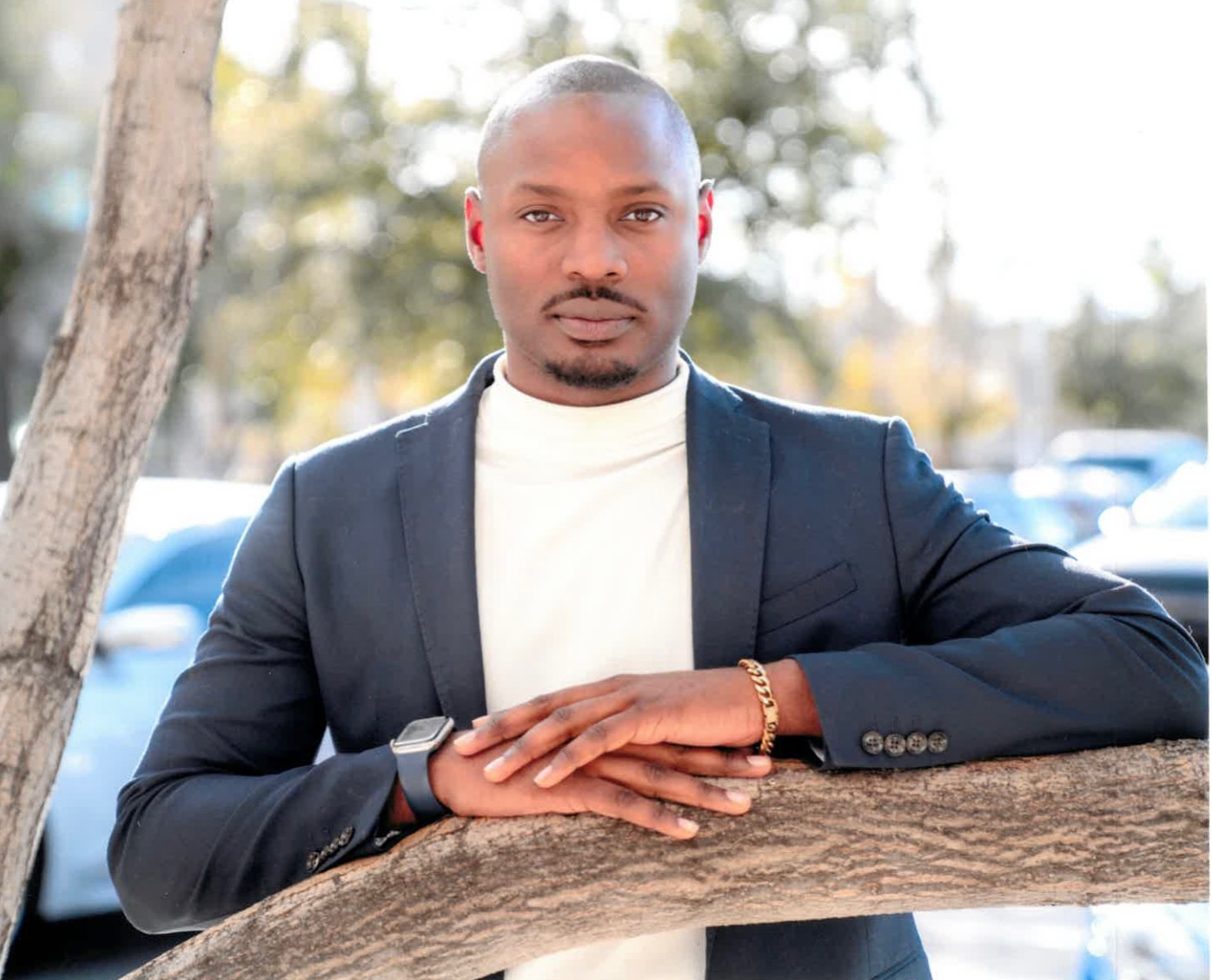
At Raise the Future, DaShun Jackson works as a Family Support Practitioner, where he trains families and professionals in Trust-Based Relational Intervention ® (TBRI ®) and provides direct support to families facing challenges. But long before he stepped into this role, DaShun was a young person navigating the very system he now works to improve.
DaShun entered foster care in Las Vegas at age 12 after years of trauma at home. He and his three younger siblings were placed together at Child Haven, but over time, they were separated. “We went from seeing each other every day to not at all,” he recalls. That loss was deeply painful, but not the last of the hardships he would face. A placement with a relative brought more instability and harm—leaving DaShun to navigate some of his most formative years in survival mode.
But there were moments of light. One came during what he assumed would be just another court hearing. At the time, he’d recently been placed in a foster home with a man he barely knew. “I was walked into the courtroom by deputies,” DaShun said. “Across the room was this man in a burnt orange shirt and glasses. I couldn’t tell you what the judge said that day—but I can tell you exactly how he looked, because it was the first time someone showed up for me.”
DaShun had grown up without adults attending school events, games, or celebrations. “That moment in court changed something for me,” he said. “I didn’t know this man well, but the fact that he was there—it mattered.” In the beginning, he barely spoke. “I didn’t talk for a month. And when I did, it was just ‘yes’ or ‘no.’” It wasn’t defiance—it was how he protected himself. But over time, that foster home became a space where he could start to heal.
“I felt blessed to be somewhere I didn’t have to fight for food or love,” he said. “So I made it my mission to give that same sense of security to others.”
In high school, DaShun started a club called Kids in Need, supporting local youth and two foster care agencies in Las Vegas. That led him to join Nevada’s Youth Advisory Council, where he eventually served as president—amplifying the voices of foster youth at the state level. His leadership didn’t stop there. DaShun later interned in Washington, D.C., with the Senate Diversity Initiative Office under the late Senator Harry Reid through the Congressional Coalition on Adoption Institute—an experience that only deepened his commitment to reform.
He would go on to help pass Nevada’s Foster Care Bill of Rights, participate in national foster youth policy groups, and continue advocating for change. Today, he’s pursuing his Master of Social Work and dreaming bigger: he wants to create a space—a “village,” as he puts it—where youth and young adults feel safe, supported, and free to be themselves.
What’s always guided him is presence. “Sometimes kids just need one person to see them—not for what they’ve been through, but for who they are and who they could become,” he said. One of his favorite metaphors is the story of the starfish: you may not be able to save them all, but throwing even one back into the ocean makes a difference. “Someone did that for me. That’s what I try to do now.”
His advice to caregivers and those new to this work is simple but powerful: “This isn’t easy. Kids may push you away—not because they don’t want love, but because they’re scared. Be patient. Keep showing up. The seeds you plant will grow.”
And to youth currently in foster care, DaShun shares this message:
“Today might hurt. Tomorrow might too. But pain isn’t permanent—and your past doesn’t get to decide your future. You do. You’re allowed to dream bigger than your circumstances. Keep going.”